Legal AI Document Generation: Benefits and Challenges

Lately, the integration of artificial intelligence (AI) into various sectors has grown exponentially. Legal services are one of the areas that have undergone a transformation. Legal AI, particularly in document generation, has significantly changed how professionals draft legal documents. Through automation and machine learning, it promises to simplify workflows, increase efficiency, and reduce costs.

However, despite its remarkable potential, document generation presents unique challenges. These must be addressed before it can become fully integrated into the legal industry.

Introduction: The Rise of Legal AI in Document Generation

Finger pressing a digital screen with the legal scale, typewiser, legal AILegal professionals have long been familiar with the tedious nature of document drafting. Contracts, pleadings, memorandums, and other legal documents demand precision, consistency, and considerable time. To ease this burden, AI offers automated solutions to manage routine tasks that were once time-consuming and repetitive. Using natural language processing (NLP), machine learning, and advanced algorithms, it can create, review, and amend documents with minimal human intervention.

I/ Benefits of Legal AI Document Generation

A/ Efficiency and Time Savings

One of the most significant advantages of AI in legal document generation is the speed at which tasks can be completed. Traditional document drafting can take hours or even days to finalize, depending on the complexity of the matter. AI-driven platforms, however, can produce accurate and relevant documents in a fraction of the time. These systems are capable of automatically filling in data from templates, reviewing past documents for consistency, and generating draft documents that require minimal human oversight. This efficiency allows legal professionals to focus on higher-level strategic tasks.

B/ Cost Reduction

Legal services are often expensive, largely due to the time and effort required for manual tasks like document drafting. By automating these processes, AI significantly reduces the time spent on low-value tasks, ultimately lowering costs for both clients and firms. For small businesses and individuals seeking affordable legal services, it offers cost-effective solutions without compromising the quality of legal documents.

C/ Improved Accuracy and Consistency

Legal documents require absolute accuracy, as even minor errors can have serious consequences. AI helps minimize human error by using structured templates and algorithms to generate documents that align with legal requirements. However, studies show that legal AI research tools can produce incorrect information in 17% to 33% of cases. While AI enhances efficiency and consistency, it’s essential for legal professionals to review and verify the content to ensure accuracy before finalizing any document.

D/ Accessibility and Scalability

Legal AI solutions make legal document generation accessible to a broader range of people. Legal professionals can benefit from AI-driven tools without having to hire large teams of lawyers. These tools can be scaled to meet the needs of larger firms, helping them manage high volumes of documents with ease. 

For example, Unilever’s legal delivery centers have used AI to process large volumes of legal contracts, increasing productivity and allowing legal teams to focus on more complex tasks.

II/Challenges of Legal AI Document Generation

An open book with futuristic elements in it, Legal AI, Typewiser

While the benefits of AI document generation are clear, the technology also presents several challenges that must be addressed to reach its full potential.

A/ Quality and Interpretation of Legal Language

A major challenge is the complexity of legal language. Legal documents use highly specialized terminology and require a deep understanding of legal principles and the law itself. While AI systems can analyze vast amounts of data, they may struggle to fully grasp nuances, especially ambiguous or context-dependent terms.

B/ Ethical and Accountability Concerns

As AI takes on more responsibilities, ethical concerns around accountability and decision-making emerge. In document generation, a system’s recommendations or outputs could have serious legal consequences. If an AI system generates a flawed contract or an incorrect legal argument, who is responsible? Legal professionals must review and validate AI-generated documents to ensure compliance and accuracy. The question of liability in the event of an AI error remains a significant challenge for the legal industry.

C/ Data Privacy and Security

Legal documents often contain sensitive and confidential information. When using AI tools, law firms and legal professionals must ensure compliance with privacy regulations and implement robust data security measures. If a system is not properly secured, there is a risk of data breaches or unauthorized access to confidential documents. Protecting client data must remain a top priority when adopting AI-driven solutions.

D/ Resistance to Change

The legal industry is deeply rooted in tradition and often cautious about new technologies. Many legal professionals, especially those with years of experience, may hesitate to trust AI for document generation. Concerns about job displacement, reduced quality of legal work, or disruptions to established workflows contribute to this reluctance. Such resistance can slow adoption and prevent the technology from reaching its full potential.

Recent statistics, however, show an increasingly optimistic intake. AI adoption among legal professionals has increased significantly in the past year, with 79% now using AI in their practice, up from just 19% in 2023.

E/ Regulatory and Legal Compliance

Legal documents must adhere to a wide array of regulations and jurisdiction-specific requirements. AI tools must be designed to understand and apply these varying rules effectively. AI systems must be continuously updated to reflect changes in laws, regulations, and legal precedents. Keeping up with the continuously shifting legal framework is a significant challenge for both technology providers and legal professionals.

The Future of AI in Legal Document Generation

Documents, legal scale, futuristic feel, legal AI,  typewiser

Despite these obstacles, AI-driven legal document generation is expected to advance considerably. As technology continues to advance, systems will likely become more capable of understanding legal language and improving the accuracy of generated documents.

Additionally, AI tools will become more user-friendly and integrate seamlessly with other legal technologies, enhancing workflows and collaboration between humans and machines. One such tool is Typewiser, which leverages AI to make legal document drafting faster and more efficient. With a range of templates and automation tools, it helps legal professionals save time while maintaining accuracy. By reducing manual effort, Typewiser allows users to focus on higher-value legal work. Learn more at typewiser.com.


AI Business Models: Opportunities and Challenges in 2025

By 2025, artificial intelligence will have moved well beyond proofs of concept. It will no longer be just a buzzword but deeply embedded within day-to-day business operations, reshaping complex workflows with nuanced, human-like decision-making capabilities. Let’s explore some of the emerging AI models that are currently gaining traction and the exciting opportunities they can unlock.

A screen with Chat AI written, hand typing, purple blue shade, Typewiser, AI business

1. Beyond “AI-as-a-Service” Hype

A lot of businesses are drawn to the “AI-as-a-Service” (AIaaS) trend because it promises quick deployment and lower upfront costs. Much like the shift toward software subscriptions a decade ago, AIaaS is built  to help organizations harness sophisticated machine learning (ML) tools without massive in-house engineering teams or on-premises data centers.

Leveling the Playing Field

Startups and mid-sized companies that might not have the budget to hire a fleet of data scientists can still tap into powerful AI infrastructure. This helps them remain competitive and innovative—even with far larger rivals.

Real-World Caution

While the pay-as-you-go model lowers initial barriers, there’s a risk of over-dependence on one or two service providers. If a company locks itself into a specific platform’s tech stack, switching providers can be disruptive and costly. Early strategic planning is critical: consider how to stay flexible in case needs (or regulations) change, especially in the fast-moving AI business ecosystem.

2. Industry-Specific AI: Going Deep Rather Than Wide

hexagons with multiple images, AI, crane, Typewiser, AI business

One of the clearest lessons from the early AI boom is that context matters. A one-size-fits-all model can be impressive in demos but less useful in specialized environments like healthcare or finance. By 2025, you can expect a surge of vertical AI solutions built on rich, domain-specific datasets.

Practical Use Cases

  • Healthcare: Tools that analyze medical images to detect subtle anomalies, or systems that sift through electronic health records to pinpoint risk factors.
  • Manufacturing: Predictive maintenance that helps factories avoid costly downtime by catching machine failures before they happen.

Niche Expertise

These narrower solutions often come from startups that partner closely with domain experts. The best of them not only develop algorithms but also handle real-world bottlenecks like regulatory approvals and seamless integration with legacy systems.

3. Data Monetization: Treading the Fine Line

As companies gather more data, some see the potential to package and sell it—or offer AI-driven insights—through APIs or marketplaces. This shift can transform data from a passive asset into a dynamic revenue stream, fueling new opportunities in the AI business sector.

Opportunity for Growth

Data, whether it’s on consumer behavior, manufacturing defects, logistics routes, or health patterns, can be incredibly valuable to other organizations that don’t have it. Think of retailers offering anonymized purchasing trend data or smart cities sharing traffic flow data with ride-sharing apps.

Privacy & Ethics

However, there’s a line between responsible data sharing and privacy violations. Stricter regulations (like updated GDPR-style rules or region-specific consumer data laws) will likely surface in the near-future, making compliance a critical aspect of any data monetization strategy. An ethical misstep can lead to legal battles and lasting brand damage.

4. AI-Driven Platforms and Ecosystems

Platforms that incorporate multiple AI capabilities—from natural language processing (NLP) to automated decision-making—are well on their way to becoming the backbone of digital transformation across industries.

Building an Ecosystem

By offering APIs and developer-friendly tools, platform owners can attract a diverse network of startups, enterprise dev teams, and freelancers who build specialized apps on top of the core AI. This fosters network effects—where increased adoption enhances the platform’s capabilities, data richness, and overall value—strengthening its position in the AI business sphere.

Risk of Lock-In

On the flip side, companies that rely too heavily on a single ecosystem may become dependent on that provider’s roadmap, pricing, or even politics. Diversifying technology investments—especially for mission-critical processes—remains a wise approach.

5. Intelligent Automation, Not Just Traditional RPA

Automation written in a box, a man is clicking on the box, Typewiser, AI business

Robotic Process Automation (RPA) initially enabled businesses to automate routine, repetitive tasks. By 2025, RPA has integrated closely with AI, enabling automation of more complex workflows that demand analysis, decision-making, and adaptive responses, going beyond simple form-filling to interpreting data and determining optimal actions.

Workforce Impact

This shift enables workers to focus on creative problem-solving or customer-centric tasks while automation handles routine, rules-based operations. Still, businesses should prepare for upskilling and reskilling: employees need to learn how to interpret AI-driven insights and troubleshoot when things go wrong.

Outcome-Based Business Models

Some AI-automation providers may offer performance-based pricing (for example, fees tied to the cost savings or efficiency gains generated). This aligns vendor incentives with business outcomes but also demands transparent metrics and well-defined expectations.

The Challenges

Regulatory and Compliance Maze

Governments globally are wrestling with how to regulate AI, from setting ethical guidelines to restricting data flows. Soon, expect a patchwork of regulations—some strict, some less so—making it harder for multinational companies to keep track.

Risk Mitigation

Organizations that want to operate internationally need robust compliance infrastructures, from dedicated legal teams to AI-audit protocols that ensure models meet local standards on privacy and fairness. As AI business expands across borders, staying ahead of evolving regulations is crucial.

Hidden Bias and Ethical Dilemmas

One of the persistent problems with AI is that if your data contains bias, your AI will learn it—and propagate it. Addressing these issues requires more than lip service. It involves carefully curating training data, setting up bias detection measures, and planning how to fix issues when they arise.

Human Oversight

Even the best AI model benefits from regular human checks. In sensitive fields like healthcare or criminal justice, a hybrid approach—where AI’s suggestions are reviewed by professionals—helps maintain accountability and trust.

Talent Wars and Skill Gaps

While more universities and training programs are racing to produce AI specialists, the demand often exceeds supply. Businesses of every size are competing for the same talent pool—data scientists, ML engineers, AI ethicists, and more.

Upskilling Matters

Companies that invest in training their existing workforce to work effectively with AI may find it easier to remain competitive than those perpetually trying to outbid competitors for top-tier specialists.

Data Security and High Costs

lock coming out of a computer screen, blue shade, hand holding a pen, Typewiser, AI business

AI can be expensive, especially at scale. Training advanced models often requires specialized hardware like GPU clusters or proprietary chips. Storing, transferring, and protecting large datasets also raises cybersecurity risks.

Measuring ROI

The pressure to justify AI investments is real. Boards of directors and stakeholders want to see tangible returns, not just hype. Managing these expectations, phasing in implementations, and carefully tracking outcomes is crucial for long-term success.

Supercharge Your AI-Driven Business Model with Typewiser

Staying ahead in AI-driven business requires smart solutions. Typewiser, an AI-powered text generator, streamlines the creation of compelling proposals, reports, and content effortlessly. Whether you’re optimizing grant applications or refining business communications, Typewiser puts AI to work for you.

Sign up today and experience smarter writing!


The October 2024 EIC Accelerator: A Record-Breaking Round of Innovation

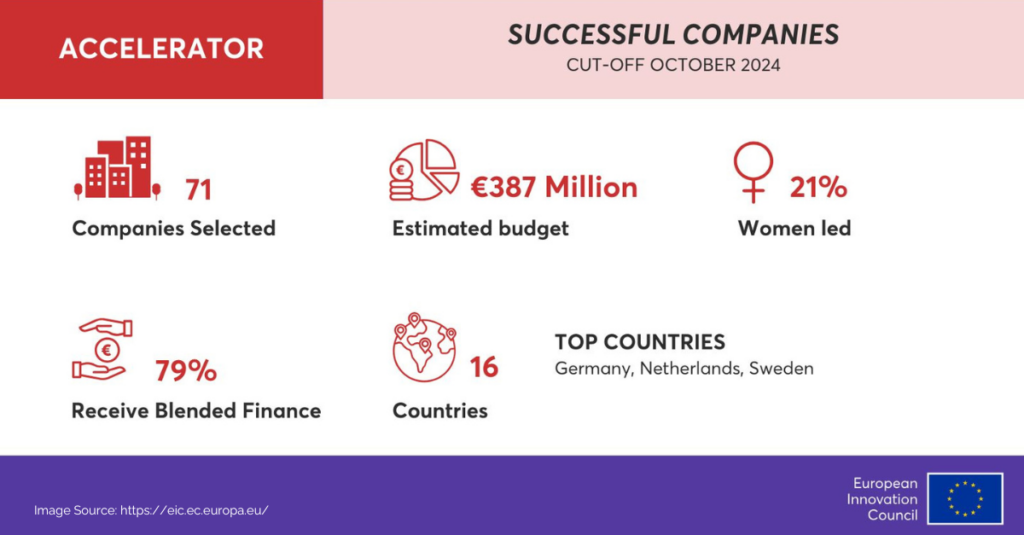
The European Innovation Council (EIC) Accelerator program has once again raised the bar, making its October 2024 funding round the most competitive in history. As of February 2025, 71 game-changing companies have secured a total of €387 million in funding through the EIC Accelerator. The results reflect the program’s growing impact on breakthrough innovation in Europe.

An Unprecedented Level of Competition

With 1,211 proposals submitted, only 6% made the final cut. Out of those, 431 companies advanced to jury interviews before the final selection. 

How Was the Funding Distributed?

Here’s how the €387 million was allocated:

  • Blended finance (grant + equity): 56 companies (79%)
  • Grant-only funding: 10 companies (14%)
  • Equity-only funding: 5 companies (7%)

Blended finance is increasingly becoming the preferred model, ensuring companies receive both immediate capital and long-term investment. 

Did you know some startups get a fast track to EIC Accelerator funding? The ‘Plug In’ scheme allows certified national and regional programs to submit top projects directly to the final application stage—helping innovators secure funding faster.

For the 330 companies that impressed the EIC jury but missed out due to limited funds, the Seal of Excellence opens doors to alternative funding like the Recovery and Resilience Funds and European Regional Development Funds.

Where Are the Winners From?

Innovation is happening all over Europe, but some countries stood out more than others.

The selected companies represent 16 countries, with Germany leading the way (21%), followed by the Netherlands (16%) and Sweden (10%). 21% of the funded startups are led by women (CEO, CSO, or CTO), showcasing a positive shift toward diversity. These results highlight the evolving landscape of innovation supported by the EIC Accelerator.

Which Sectors Are Shaping the Future?

The EIC is betting big on cutting-edge technologies that will redefine industries. Here’s where the money is going:

  • Deep Tech: Quantum computing and advanced semiconductors
  • AI & Data: AI security and synthetic data generation
  • Healthcare & Biotech: Medical devices and gene therapy
  • Energy & Sustainability: Green hydrogen and carbon capture technologies

Meet the Game-Changers: Startups to Watch

Among the winners, a few startups are making waves with their groundbreaking ideas:

  • Brineworks: Extracting CO₂ and hydrogen from oceans in a sustainable way.
  • MOA Biotech: Turning agrifood byproducts into high-value proteins.
  • SICSAI: Developing an Artificial General Intelligence (AGI) model for robotics.
  • CorPower Ocean: Secured up to €17.5 million to advance wave energy technology.
  • BioThrust: Creating bioreactors that revolutionize large-scale cell production.

Which of these innovations excites you the most, and how could they change the world?

Looking Ahead: What’s Next for Innovation?

With such an impressive lineup of startups, the future of European innovation looks bright. As these companies develop their technologies, they could transform industries like clean energy, artificial intelligence, and biotechnology. Backed by the EIC Accelerator, these breakthroughs have the potential to drive significant impact across sectors.

Bridging the Gap: How Can Startups Improve Their Chances of Success?

As funding competition intensifies, how can startups improve their chances of success? One crucial factor is the ability to communicate their vision effectively through compelling grant applications, pitches, and investor proposals. This is where Typewiser comes in—helping innovators craft impactful submissions that resonate with evaluators and investors, especially in programs like the EIC Accelerator.

By offering AI-powered writing assistance tailored for startups and innovators, Typewiser helps craft persuasive, high-impact funding applications that maximize success rates. Whether refining a proposal or structuring a pitch, having the right words can make all the difference. If you’re looking to boost your startup’s chances in the next EIC round, Typewiser could be your secret weapon.

Stay tuned as we follow the journeys of these startups and witness the next big breakthroughs!

The content of this document was created with support from Typewiser.

Is Your Organization Ready to Harness the Power of Generative AI?

Generative AI is no longer just a futuristic concept. It is actively transforming industries by automating workflows, optimizing decision-making, and enhancing content creation. By 2030, AI could contribute up to $15.7 trillion to the global economy, making it a significant driver of future growth. 

However, adopting AI isn’t just about keeping up with trends. Organizations must assess whether they are truly ready to integrate and maximize AI’s potential. AI adoption comes with challenges, including data readiness, workforce training, ethical concerns, and aligning AI with business goals. Here’s what organizations need to consider before implementing generative AI.

Aligning Generative AI with Business Objectives

three tiles, white background, checkmarks at the side, bullseye in the center, generative ai, ai text generator, typewiserJumping into AI without a clear plan can be costly. Estimates suggest that between 70-85% of AI projects fail to meet their objectives. The biggest mistake businesses make is implementing AI just for the sake of it, rather than identifying where AI can drive real value.

AI should be tied to specific outcomes, such as:

  • Automating time-consuming tasks (e.g., report generation, data entry).
  • Enhancing customer engagement (e.g., chatbots, personalized recommendations).
  • Driving better decision-making with real-time data analysis.

For example, AI-powered writing tools help organizations save time on documentation-heavy processes. In grant writing, AI-generated proposals can reduce writing time while improving structure and clarity. However, without a defined goal, AI can create more confusion than efficiency.

Ensuring Data Quality and Compliance

AI is only as good as the data it learns from. Inconsistent, outdated, or biased data can skew AI-generated outputs, leading to inaccurate insights or compliance issues. Data readiness is a key factor in AI adoption.

Organizations must ensure their data is:

  • Accurate – No outdated or duplicate records.
  • Structured – Well-organized for AI processing.
  • Compliant – Meets industry regulations like GDPR and CCPA.

Data compliance is particularly important in finance, healthcare, and government sectors, where AI-driven decisions can impact regulatory obligations. For grant applications, poorly formatted data can lead AI tools to generate inaccurate funding proposals. Ensuring clean, well-labeled datasets is a critical step in making AI truly useful.

Developing an AI-Ready Workforce

small tiles with black outline of people, yellow backgroundai text generator, typewiserAI adoption doesn’t replace employees—it changes how they work. However, 67% of companies report a lack of in-house AI expertise as their biggest barrier to adoption. 

Organizations must build AI literacy across all levels, from executives to operational teams. Key areas include:

  • AI fundamentals – Understanding how AI models function.
  • Data literacy – Ensuring employees can interpret AI-generated insights.
  • Ethical AI use – Recognizing bias, fairness, and compliance risks.

Companies investing in employee training and AI partnerships see greater returns on AI adoption. Hiring AI specialists or providing hands-on AI training programs can help bridge knowledge gaps and accelerate AI implementation.

Implementing Ethical Generative AI Practices

AI decisions impact people, policies, and profits. Without responsible AI governance, businesses risk bias, regulatory fines, and loss of customer trust. 63% of consumers are concerned about potential bias and discrimination in AI decision-making. 

To ensure AI is fair, unbiased, and secure, organizations must:

  • Ensure transparency – AI models should be explainable.
  • Mitigate bias – Diverse training datasets prevent discriminatory patterns.
  • Prioritize security – Protect AI-generated data from cyber risks.

One way to maintain ethical AI use is by implementing “Human-in-the-loop” (HITL) models, where AI suggestions require human validation before final decisions are made. This is particularly useful in industries like healthcare, finance, and hiring, where AI-driven errors can have serious consequences.

Scaling AI in Business Operations

AI should not be viewed as a standalone tool—it must be integrated into existing workflows to maximize impact. Businesses that successfully scale AI follow a structured approach:

  1. Start with a small AI pilot – Test AI in a limited, low-risk environment.
  2. Measure success – Set KPIs (e.g., cost savings, efficiency improvements).
  3. Refine the model – Adjust based on feedback and real-world results.
  4. Scale gradually – Expand AI applications to additional departments.

Organizations that treat AI as a long-term investment rather than a quick fix see the best results in efficiency and decision-making.

Leveraging AI-Powered Tools in Document Writing

ink pern, rainbow splashing colors, ai text generator, typewiserAI is making document creation more efficient by helping organizations generate structured, high-quality content with greater speed and accuracy. Whether drafting reports, research summaries, or technical documents, AI helps streamline the writing process while maintaining clarity and compliance.


Typewiser, an AI-powered writing tool, enhances document creation by helping teams:

  • Build a knowledge library from PDFs, presentations, and notes for AI-driven content alignment.
  • Generate structured, high-quality documents with automated organization and refinement.
  • Edit and refine text instantly, reducing manual writing time and improving consistency.

By integrating AI into document writing, organizations can focus on content strategy rather than formatting and revisions, improving productivity and maintaining high-quality standards.
Explore AI-powered document writing with Typewiser.

Moving Forward with Generative AI

AI isn’t just a tool—it’s a competitive advantage. Organizations that prepare strategically will gain the most from AI’s capabilities. Whether it’s writing reports, conducting research, automating workflows, or crafting grant proposals, AI-powered platforms offer efficiency and structure.

A well-planned approach allows organizations to fully leverage generative AI as a competitive advantage, rather than just a tool, to drive efficiency and innovation.

AI-powered platforms enhance productivity and structure across reports, research, workflows, and grant proposals. Fully harnessing the benefits of generative AI requires investment in AI strategy, high-quality data, skilled teams, and responsible implementation.

Tools like Typewiser, an AI text generator, make it easier to create structured, high-quality content while reducing manual effort. 

With the right approach, AI becomes more than just a technology—it becomes a productivity multiplier.

AI in Scientific Research: A Tool, A Collaborator, or A Co-author?

Writing can be one of the most time-consuming aspects of scientific research. In recent years, AI in scientific research has introduced new possibilities for streamlining the writing process, but it also raises important considerations regarding authorship and integrity.

 While carrying out experiments, analyzing data, and engaging in innovative thinking may feel more intellectually stimulating, it is through writing that researchers share their findings with the broader community.

Red yellow beaker with liquid, colorful paper, a pen,  AI scientific researc

This essential step—communicating results with clarity, rigor, and integrity—ensures that new discoveries advance the collective body of knowledge. However, the pressure to publish and the competitive landscape in academia often strain researchers’ capacities.

Finding Common Ground on AI in Scientific research

In November 2022, the disruption caused by large language models (LLMs), including ChatGPT, ignited a lively debate about their ethical use in scientific communication. Some suggested listing these models as co-authors, while others called for outright bans. After ongoing discussions, three major conclusions emerged:

  • LLMs are here to stay. They are rapidly evolving and becoming commonplace.
  • Detection systems for AI-generated text are unreliable. Many proposed detection methods show inconsistent results.
  • LLMs cannot assume personal responsibility for the text they generate. Authorship implies accountability, and software cannot fulfill this role. Nonetheless, some authors suggest dropping personal responsibility from these articles.

Navigating AI’s Role in Scientific Writing

White paper, minimalistic design, pen, paper, scribbles, AI in scientific research

AI is becoming an integral tool in academic writing and research. However, its use raises concerns about authorship, accountability, and integrity. Emerging guidelines aim to balance the benefits and risks of LLMs in research.

Below are key takeaways:

1. Declare how you used the LLM

Transparency is fundamental to ethical research. If an LLM was used for proofreading, rephrasing, or improving English quality, this should be explicitly stated in the acknowledgments or methods section of the manuscript. Clearly disclosing AI assistance fosters trust among readers and colleagues while delineating the boundaries of the author’s intellectual contributions.

2. Do not list LLMs as co-authors

Authorship in scientific literature entails responsibility, including accountability for the data and conclusions. Since LLMs cannot assume personal responsibility, they do not meet the criteria for authorship. Listing an LLM as a co-author is therefore inappropriate and may undermine the credibility of the manuscript.

3. Verify and validate AI-generated text

While not always explicitly stated in journal guidelines, careful verification of AI-generated content is essential. LLMs are prone to “hallucinations” and biases, sometimes producing factual inaccuracies or misleading statements. Researchers must thoroughly review AI-assisted text for accuracy, clarity, and alignment with their findings.

LLMs can significantly reduce the administrative burden associated with research grant applications, progress reports, and other formal documentation by expediting drafting processes. However, AI in scientific research should be approached with caution—these models generate outputs based on patterns in their training data rather than direct comprehension of the subject matter. 

As a result, they may produce text that appears credible but is factually incorrect. Understanding both the strengths and limitations of AI tools is critical to leveraging them effectively and responsibly.

Integrating AI Responsibly in Research

Light pink and light blue background, different types of transparent beakers, , AI scientific research

The potential of LLMs to save researchers’ time is undeniable. Freeing up hours once spent on meticulous writing tasks allows you to focus on creative thinking, data analysis, and designing innovative experiments. Yet, these advantages should never compromise the ethical standards fundamental to scientific work. As AI in scientific research becomes more prevalent, ensuring its responsible use is critical to maintaining credibility and trust in scholarly communication.

By clearly declaring AI usage, maintaining author accountability, and diligently verifying AI contributions, we can harness LLMs in ways that uphold the integrity of the scientific record. As these tools evolve—and as the debate around them continues—the best practice is to stay transparent, alert, and committed to the core principles of research: honesty, rigor, and responsibility.

More recently, OpenAI released the Deep Research feature, with the potential to transform scientific research and paper writing by automating multi-step web analysis. It searches, interprets, and consolidates information from hundreds of sources in minutes, delivering well-documented reports with citations.

Science moves fast—your writing should too. Typewiser helps structure ideas, refine arguments, and create publication-ready texts. Let AI-powered smart technology streamline your workflow. Sign up today and start writing for free!

Here’s How AI Documents Are Changing the Way We Write

The evolution of AI is reshaping the foundations of written communication, introducing a fundamental change in how ideas are crafted and shared. AI documents showcase this transformation, enhancing and streamlining the creation process.

What was once the domain of human creativity has evolved into a collaborative ecosystem where technology and expertise intersect to redefine the essence of document creation.

Lets explore the new dynamic where AI isn’t replacing creativity—it’s amplifying it.

The History of AI Writing

Bright image, content written on a blank paper, pencil, AI documents, TypewiserBack in the day, documents were limited to simple, cookie-cutter templates. Think basic emails or standard reports. They fundamentally lacked the sophistication to handle complex writing tasks. 

These primitive tools operated with minimal understanding of language’s contextual nuances, often producing mechanically correct but contextually inappropriate text, making their role in generating AI documents limited and simplistic.

Significant challenges prevented these systems from creating meaningful, nuanced documentation:

Lack of Contextual Understanding: Early AI systems struggled to grasp the broader context of text, resulting in outputs that lacked the subtlety and depth necessary for advanced writing.
Limited Training Data: The datasets used were often too narrow or overly generic, restricting the AI’s ability to adapt to specialized fields or technical content.
Rudimentary Natural Language Processing: The absence of advanced language models meant that early technologies were unable to effectively handle complex syntax or semantics.

As a result, AI functioned mainly as a supplementary tool for automating repetitive tasks. Its inability to generate tailored, high-quality content significantly limited its applications in professional or specialised purposes.

The Technological Revolution

The arrival of advanced Large Language Models (LLMs) like GPT and BERT transformed the relationship between artificial intelligence and human language.

These models, designed with extensive datasets and intricate neural network architectures, showcased a strong grasp of context, enabling them to produce cohesive text and adapt to diverse writing styles with accuracy. This advancement redefined the capabilities of AI in language processing and generation.

Advancements in natural language processing (NLP), machine learning, and computational power have driven these developments in AI:

  • Context-Driven Language Models: Modern LLMs use transformer architectures to achieve a deeper understanding of context, enabling AI to interpret meaning accurately and tailor text to user intent.
  • Extensive Training Datasets: These models are trained on massive datasets spanning various industries and languages, making them versatile and adaptable for creating AI documents.
  • Advanced Machine Learning Techniques: Innovations like few-shot learning and reinforcement learning with human feedback have significantly improved the accuracy and relevance of AI-generated content.

Modern AI Writing Systems

AI-powered writing has taken a technological leap, mastering complex document creation tasks with an advanced level of precision and expertise.

Platforms like Typewiser are leading this progress, seamlessly integrating human insights with cutting-edge technology to redefine the role of AI in writing.

Developed in collaboration with writing experts, Typewiser delivers accurate and relevant content that meets the highest industry standards. By leveraging multiple LLMs, each chosen for its unique strengths, the platform ensures precision, depth, and adaptability.

Whether it’s crafting complex grant proposals or customizing content for diverse audiences, Typewiser raises the bar for automated document creation, providing professional results tailored to the needs of any industry.

Diverse Applications Across Professional Domains

Aesthetic image of documents, background blue, white document outline, AI documents, TypewiserAI’s capabilities in document generation have expanded significantly, enabling it to address a wide range of professional needs:

  • Grant Proposals: AI simplifies the traditionally time-consuming process of crafting grant proposals by researching, structuring, and drafting compelling documents tailored to specific funding priorities.
  • Non-Binding Legal Documents: While binding agreements still require human oversight, AI assists in creating contracts, terms of service, and legal templates by identifying standard clauses and organizing information logically.
  • Business Plans and Funding Pitches: AI tools generate comprehensive business plans with financial projections, market analyses, and operational strategies, giving entrepreneurs a strong foundation for investor presentations.
  • Technical Manuals and Guides: AI effectively translates complex technical details into clear, user-friendly manuals and guides, simplifying jargon and localizing content for diverse audiences.
  • Multilingual Content Creation: AI’s ability to produce localized content in multiple languages ensures precise translations and cultural relevance, empowering businesses to communicate globally with ease.

Technological Foundations and Practical Implications

Modern AI writing tools, built on computational linguistics and machine learning techniques, are changing professional workflows. These systems process large datasets, recognize linguistic patterns, and adapt to specific domains with precision.

Techniques like few-shot learning, reinforcement learning, and multimodal model development expand their potential, enabling professionals to save time on document creation and focus on strategic and creative tasks.

AI ensures consistency by reducing errors and maintaining a uniform tone across documentation. It also makes technical knowledge more accessible by breaking down complex concepts into clear language. These tools help professionals work efficiently and improve productivity.

The Future of AI-Driven Writing

hand holding a folder icon, AI documents, TypewiserThe evolution of AI-powered writing tools has only just begun. As AI models become increasingly sophisticated and integrated into various industries, we can anticipate even more impressive capabilities, such as a deeper understanding of literary nuances, increased capacity for inference and rational “thought”, and seamless integrations with other productivity software. These advancements will make AI documents significantly more useful in professional settings.

To experience the transformative power of AI in writing, explore Typewiser and discover how it can redefine your document creation process. The impossible is now just a draft away.

Create smarter documents effortlessly with AI! Choose from 200+ templates for business plans, reports, and more.

Sign up for Typewiser today and simplify your workflow.

The Future of AI in Legal Jobs: AI’s Impact on Legal Experts

The legal industry is embracing a new era with AI in legal. What once seemed futuristic is now a practical reality, changing how legal professionals work. From automating tasks to enhancing insights, artificial intelligence is redefining the way legal services are delivered.

Legal lady, AI in Legal, AI writing

AI Boosting Legal Practice Efficiency

Key aspects of legal practice are undergoing a transformation, delivering smarter and faster solutions than ever before.

With tools leveraging natural language processing to sift through vast amounts of legal data, research has become more efficient, delivering precise and timely results. 

But it doesn’t stop there…

AI-driven drafting, contract analysis, and document review are revolutionizing workflows by automating tedious tasks once handled by paralegals and junior attorneys. This shift allows legal teams to focus on high-value, intricate responsibilities that truly require human expertise.

Going even further, predictive analytics powered by AI is empowering professionals to anticipate trends and outcomes, enabling smarter strategies and better decision-making. 

AI and Lawyers: A Powerful Partnership

Men shaking hands, scales of justice, Legal lady, AI in Legal, AI writing

Rather than replacing lawyers, AI is redefining how they approach their work.

While AI automates routine tasks, it cannot replicate the human expertise, creativity, and empathy essential for roles like advising clients, defending cases, or making complex judgments. Instead, it acts as a powerful tool, enabling lawyers to focus on strategic decision-making, client relations, and interpreting the law.

For instance, AI in legal tools swiftly analyses statutes and case law and identifies key documents, but it’s the lawyer’s expertise that applies these findings to a client’s unique needs. By automating time-consuming tasks like document review, AI frees lawyers to dedicate time to crafting arguments, negotiating outcomes, and making strategic decisions. This synergy creates a more efficient and impactful legal practice.

Assisting Legal Experts: New Opportunities

AI is introducing fresh opportunities for paralegals and support staff by taking over routine tasks.

With these basics covered, professionals can dive into more detailed work, such as drafting legal documents or preparing case summaries. This transformation also opens opportunities to develop new tech skills and collaborate with advanced systems. Additionally, roles like legal operations specialists and AI integration consultants are emerging, offering exciting ways to blend legal expertise with technology.

AI in Law Firm Management: Streamlining Operations

Law firms are evolving with smarter solutions, simplifying day-to-day tasks and optimizing operations.

AI now handles activities like scheduling, billing, and client communication, making workflows more efficient and even predicting financial performance. These advancements help firms save time and cut costs.

This progress is also creating new positions, such as legal technologists, who ensure AI in legal tools is seamlessly integrated into daily operations.

Embracing AI in Legal: Elevate Your Workflow with Typewiser

Ladi with blindfold, scales of justice, Legal lady, AI in Legal, AI writing

Adapting to AI in legal situations is becoming a necessity for professionals aiming to stay ahead.

Whether you’re a paralegal, attorney, or law firm manager, embracing tools like Typewiser and developing skills such as data analytics and technology integration is critical to staying competitive.

AI isn’t here to take over—it’s here to support. By managing routine tasks, it allows you to focus on what truly matters: creativity, judgment, and delivering exceptional value to clients.

The future of legal work is here, and AI in legal is leading the way. Typewiser, an AI-powered document writing software, helps you draft legal documents in minutes. It’s fast, accurate, and designed to take the hassle out of repetitive tasks.

Ready to simplify your workflow? Book a free demo or sign up with Typewiser today!

EIC Accelerator Challenges 2025: Driving Innovation in EU Funding Programs

The EIC Accelerator is all about driving innovation that makes a real impact. Like other EU funding programs, EICA is here to back bold projects that create new markets or completely transform old ones.

In 2025, it’s all about “Challenge Calls” focusing on Europe’s top priorities.

screws on a page, aesthetic white image, EU funding programs, EIC challenges 2025

What Are the EIC Accelerator Challenges?

The EIC Accelerator Challenges are all about pushing boundaries in tech and innovation. They tie into the big goals of EU funding programs like sustainability, technological independence, and staying competitive.

Each Challenge comes with a dedicated budget to back projects that drive real societal and industrial change. If your idea doesn’t fit a specific Challenge, the Open Call gives you the freedom to show its impact across EU initiatives.

Whether through a Challenge or the Open Call, the EIC Accelerator is here to help innovation thrive.

The Challenge Calls for 2025

The EIC Accelerator is setting the stage for 2025 with five impactful challenges, each designed to target critical areas of innovation. Here’s what’s on the agenda:

1. Acceleration of Advanced Materials Development and Upscaling Along the Value Chain

Indicative Budget: €50 million

The first challenge focuses on advanced materials shaping the future of energy, mobility, electronics, and construction. From additive manufacturing to AI-driven material design, it’s about turning scientific breakthroughs into scalable industrial solutions while embracing sustainable practices. 

Goals & Results

The aim is to create a robust framework for developing cutting-edge materials within Europe, fostering collaboration across industries and reducing dependency on non-EU resources. The result? Faster industrial adoption of innovative materials, enabling Europe to lead in global sustainability and technological advancement. 

2. Biotechnology-Driven Low-Emission Food and Feed Production Systems

 food biotechnology, man holding bell pepper, EIC accelerator challenges 2025, EU funding programs
Indicative Budget: €50 million

This challenge is all about reshaping agriculture through biotechnology, with an emphasis on reducing greenhouse gas emissions and boosting sustainability. Technologies like microbial fertilizers, biopesticides, bio-stimulants, precision farming tools, and methane-reducing livestock solutions are at the forefront.

Goals & Results

The goal is to create efficient, low-emission food production systems that promote sustainability across the EU. The result? Reduced emissions, enhanced biodiversity, and a more resilient European agri-food sector—advancing strategic autonomy and aligning with the EU’s climate and sustainability goals.

3. GenAI4EU: Creating European Champions in Generative AI

Indicative Budget: €50 million

Generative AI (GenAI) is reshaping industries, and the EIC Accelerator is here to ensure Europe leads the charge—ethically and responsibly. Supported by EU funding programs, this challenge backs projects that harness GenAI in transformative sectors like healthcare, energy, security, education, and manufacturing.

What does this mean? It could involve building new GenAI models, tailoring existing ones for specific industries, or weaving them seamlessly into real-world operations. At its core, the focus is on creating AI systems that are ethical, transparent, and trustworthy.

Goals & Results

The aim is clear: establish Europe as a frontrunner in human-centric GenAI. This challenge is about empowering smarter decision-making, boosting productivity, and reducing dependence on non-EU technologies—all while upholding EU values and ethical standards.

4. Pushing Boundaries in Space Tech

space technology, white image,  EIC accelerator challenges 2025, EU funding programs

Budget: €50 million

Space innovation is taking a bold leap forward with this challenge. Think satellite repairs in orbit, cutting-edge tools to clean up debris, and advanced systems to keep space infrastructure secure and resilient. Projects will focus on autonomous solutions, secure connectivity, and innovative ways to extend satellite lifespans.

Goals & Results

Europe is gearing up to lead the charge in space innovation—driving smarter, cost-effective technologies, reducing space debris, and ensuring a stronger, more sustainable future for its space operations

5. Breakthrough Innovations for Future Mobility

Budget: €50 million

The future of transport is getting a major boost with this challenge. Backed by EU funding programs, it’s all about advancing low-emission solutions for vehicles, ships, and aircraft. From AI tools that enhance transport efficiency to smart charging systems and sustainable fuels for aviation and maritime sectors, this challenge focuses on transformative technologies that make mobility greener and smarter.

Goals & Results

These innovations are set to drive big changes—cutting emissions, boosting efficiency, and supporting Europe’s climate neutrality goals. It’s about creating a safer, more connected, and sustainable transport system for the future. 

Take the first step towards funding your innovation 

innovation, bulb image The 2025 EIC Accelerator Challenges bring a powerful opportunity to the table. With well-defined goals and substantial funding, they open doors for startups and SMEs to create solutions that drive impact. If your idea aligns, this could be your breakthrough moment in European innovation.

Don’t let grant writing slow you down. With Typewiser, our AI grant writing software, the EIC Accelerator application process becomes seamless. Expert-level proposals in minutes mean more time for you to innovate and scale.

Want to learn more about the EIC Accelerator?

Join us on the 17th at 15:00 CET for an exclusive webinar about the EIC Accelerator and how Typewiser can streamline your grant writing process. Don’t miss out—register here.

Guide to UK Grant Funding: Key Innovate UK Impact Areas for 2025

Driving the future of innovation, Innovate UK helps businesses bring transformative ideas to market. Through its Smart Grants program, SMEs can access the support needed to scale their business and generate positive impact. Aligning your project with Innovate UK’s World-Class Impacts is a great way to make your application stand out.

Innovate UK, Typrwiser, AI grant writing software, man writing in book, silver laptop on the sideBut what exactly does “World-Class Impacts” mean, and why is it important for your Smart Grant application? Understanding this concept can help you align your project with Innovate UK’s priorities and make the most of the opportunities available through UK grant funding.

What are the World-Class Impacts?

Innovate UK’s World-Class Impacts are the heart of its strategy to drive innovation and unlock opportunities for UK businesses. Outlined in the 2022-2025 Strategic Delivery Plan, these impacts reflect the value Innovate UK seeks to add across industries through its dynamic approach to UK grant funding.

The focus? 

Three transformative domains – Net Zero, Healthy Living and Agriculture, and Digital and Technologies. 

Innovate UK, Typrwiser, AI grant writing softwareThese areas aim to empower businesses leading innovation with solutions that deliver meaningful environmental, social, and economic benefits. It’s not just about improving the UK’s global competitiveness—it’s about tackling the world’s biggest challenges head-on, from climate action to digital transformation. While it’s not mandatory to align directly with these World-Class Impacts to qualify for Smart Grants, projects that resonate with Innovate UK’s vision stand out. A clear alignment with these priorities can elevate your proposal, demonstrating how your innovation contributes to real-world change- and why it deserves UK grant funding.

Net Zero

The journey to a low-carbon, sustainable future starts here. Innovate UK has committed over £1.2 billion from 2022 to 2025 to tackle the big challenges in energy, mobility, housing, industry, and resource management. For innovators aiming to secure funding, aligning your project with the Net Zero mission can make all the difference.

Key Themes Driving the Net Zero Transition

  • Power: Revolutionize how we power our world. From renewable energy and advanced storage systems to alternative energy vectors, Innovate UK is backing projects that reduce reliance on fossil fuels and fuel industries, vehicles, and buildings sustainably.
  • Mobility: Take transport into the future. Innovate UK is looking for game-changing solutions in electrified powertrains, smart transport systems, and digital tech that cut emissions and improve efficiency. 
  • Heat: Step into a sustainable future. . From heat pumps to renewable heating systems, projects that rethink traditional gas heating with sustainable alternatives are key to the Net Zero mission.
  • Net Zero Living: Redesigning  how we live and work. Whether it’s sustainable products, services, or systems, the goal is clear: transform homes, offices, and communities into energy-efficient, low-carbon spaces.
  • Make and Use: Reimagine how things are made. Circular economy principles and sustainable manufacturing practices are front and center here, ensuring industrial processes are built for a resilient future.
  • Green Finance: Innovations need investment. Innovate UK supports projects that draw private investment into sustainable solutions, giving green businesses the boost they need to scale.
  • Circular Critical Materials: Strengthen supply chains for a sustainable future. Innovate UK is backing projects that rethink how critical raw materials are used, recycled, and recovered, helping reduce reliance on imports and secure economic resilience.

Aligning with these themes doesn’t just move the UK closer to its Net Zero goals—it positions your project to make a real impact while increasing your chances of securing UK grant funding.

Healthy Living and Agriculture

Healthcare, life sciences, and agriculture are at the heart of this domain, driving innovations that make life better for everyone. By building on the Government’s Life Sciences Vision, it aims to position the UK as a global leader, tackling health inequalities, improving diets, and ensuring food security. With over £600 million in funding, Innovate UK supports projects aligned with UK grant funding priorities to drive better health, healthy ageing, and solutions to global challenges. The focus areas of this domain are structured around five “Ps,” offering opportunities for your project to contribute to one or more of these goals:

  • Promote: Creating healthier lifestyles through innovative products and services that enhance nutrition and dietary habits.
  • Predict: Building tools and technologies to anticipate challenges such as early disease detection, climate change impacts, food supply demands, and supply chain risks.
  • Prevent: Tackling major societal threats, including chronic illnesses, infections, and issues related to crop and livestock health.
  • Provide: Advancing disease management with cutting-edge solutions like new drugs, self-care tools, and efficient pharmaceutical manufacturing processes. This area also ensures food safety and affordability for all.
  • Produce: Driving sustainable food production methods and the development of novel medicines.

Digital and Technologies

Innovate UK’s Digital and Technologies domain is reshaping industries and opening new doors through innovative digital solutions. With £380 million in funding from 2022 to 2025, it’s powering UKRI’s mission to build a secure and resilient future.

Key Areas of Focus:

  • Creative Catalyst: Helping the UK’s creative industries thrive by integrating innovative digital tools.
  • Bridge AI: Driving AI adoption in high-growth sectors to unlock big potential.
  • Quantum Technologies: Turning quantum solutions into real-world applications.
  • Services: Making professional services smarter, more efficient, and resilient through digital transformation.
  • Semiconductors: Strengthening the UK’s edge in the global semiconductor industry.

By tapping into these areas, you can align your project with Innovate UK’s vision and turn big challenges into exciting opportunities for growth and impact.

Steps to Effectively Align with Innovate UK’s Vision

Aligning with Innovate UK’s World-Class Impacts is your key to standing out and increasing your chances of securing Smart Grants funding. Here’s how you can do it effectively:

  • Start with a self-assessment: Examine how your project aligns with one or more of the World-Class Impacts domains. Clearly define the challenges you’re solving and how your approach offers a fresh, innovative solution.
  • Demonstrate scalability: Showcase how your innovation can grow, scaling from local to national or even global markets, amplifying its impact.
  • Highlight your network: Use your partnerships and collaborations to demonstrate your commitment to tackling the challenges these domains address.
  • Incorporate relevant actions: Ensure your Smart Grant project activities reflect your dedication to addressing the key domains.
  • Quantify your impact: Provide measurable outcomes to support your claims. For example, how much could your solution cut carbon emissions? How many people could it benefit? What economic value could it bring to the UK?

By taking these steps, you’ll create a compelling application that proves your project’s potential to drive real change.

Get ahead of the game with Typewiser!

The next Innovate UK Smart Grant deadlines are approaching fast—start preparing now.

The last 2024 call closes on January 22nd, 2025. With AI grant writing software, Typewiser will help you create a high quality application that aligns seamlessly with the priority domains.

Don’t miss out—let Typewiser assist you in securing UK grant funding. Sign up today and get 200 free Typewiser credits!

Do you want to apply for different funding opportunities? Contact us via info@typewiser.com for customization.

Plus, explore limitless writing possibilities with Typewiser’s “Blank document” feature—your gateway to smart, efficient writing!

Schedule a free demo now!

EIC Info Day Recap: What’s New for the EIC Accelerator?

Last week, the European Innovation Council held the EIC Info Day, packed with key updates from the 2025 Work Programme. Alongside changes to the EIC Pathfinder, EIC Transition, and EIC Accelerator schemes, they also announced a new STEP scale-up call targeting strategic technologies.

What’s New for the EIC Accelerator in 2025?

Interest in the EIC Accelerator is at an all-time high—and it’s easy to see why. With a unique blend of grant and equity support, the program helps start-ups and SMEs with market-disrupting technologies scale up and access new markets.  As a result, competition has become fierce.If you couldn’t tune into the EIC Info Day, here’s a quick catch-up:

  • Full Application 2025 Cut-Off Dates: The cut-offs remain unchanged from the confirmed dates in the EIC 2025 Work Programme. There will be only two EIC Accelerator Full App cut-offs in 2025: March 13th and October 1st. 
  • Short Application Evaluation Windows: For applicants targeting the next Full Application cut-off, Short applications will now be evaluated in batches on the first Tuesday of every month. To receive feedback and prepare for the March cut-off, you’ll need to submit by either December 3, 2024, or January 7, 2025.
  • New Maximum EIC Equity Request & 2025 Budget: Blended finance applicants can now request up to €10 million, down from the €15 million limit set during the EIC Accelerator pilot. The 2025 budget has also been slightly reduced, with €634 million allocated compared to €675 million in 2024. These adjustments are linked to the launch of the STEP call, which offers investment support ranging from €10 million to €30 million, with a total budget of €300 million for 2025.
  • No More Travel Reimbursement for Interviewed Companies:
    Companies invited to the last step of the selection process — pitch and interview sessions in Brussels will no longer receive travel or accommodation reimbursements.

Updates to Eligibility & Evaluation Criteria

One of the key changes announced by the EIC is raising the minimum Technology Readiness Level (TRL) requirement to 6. This means any work at TRL 5 must be completed first, as it’s no longer eligible for grant funding under the EIC Accelerator’s project work plan.

Another big update is about Equity Only support. In the past, only companies that had previously won Horizon Europe grants could apply. That requirement has been dropped, so now companies can apply for Equity Only funding without needing to prove they’ve received a grant before

Evaluation Updates

During the EIC Info Day, there was a strong focus on backing deep-tech innovations and truly groundbreaking technologies—not just incremental changes or purely research-focused projects. Here are a few more key updates:

  • Company Excellence Sub-Criterion Removed: This evaluation criterion for EIC Accelerator applicants has been taken out and is now used for the STEP call instead.
  • Revised Risk Level of Investment Criterion: This has been reworded to assess whether a company can attract further investment with EIC support over the next two years.
  • New Question for STEP Call Objectives: A new question has been added to specifically evaluate how projects impact STEP call objectives.

Lastly, it’s been clarified that when Full Applications for Open and Challenge calls are reviewed in consensus meetings (where two evaluators approve and one rejects), the final decision to proceed must be unanimous for an interview invitation to be issued.

Seal of Excellence and Sovereignty Seals

The Seal of Excellence (SoE) will now be awarded only to companies that reached the Interview stage but didn’t receive funding due to EIC budget constraints. This recognition is meant to help these companies access other funding opportunities more easily. In addition, SoE awardees will have access to the EIC’s Business Acceleration Services. 

A new addition to the 2025 Work Programme mentioned during the EIC Info Day, is the Sovereignty Seal, also known as the STEP seal. This seal will be given to both STEP call proposals and Accelerator Challenge proposals that align with STEP objectives. It will be awarded to projects that received funding and even those that missed out due to budget limitations.

2025 Open & Challenge Calls

The Open call will be available annually, designed to support projects from any scientific field, provided they demonstrate novel, deep-tech, breakthrough solutions. The total budget allocated for the Open call is €384 million.

A total budget of €250 million has been allocated for the 2025 Challenge calls, which include:

  • Acceleration of Advanced Materials Development and Upscaling along the Value Chain
  • Biotechnology-Driven Low Emission Food and Feed Production Systems
  • GenAI4EU: Creating European Champions in Generative AI
  • Innovative In-Space Servicing, Operations, Robotics, and Technologies for Resilient EU Space Infrastructure
  • Breakthrough Innovations for Future Mobility

Whether you’re aiming for the Open call or have a project that fits within one of the strategic Challenge calls, preparing a strong application is critical to maximising your chances of success.

Ready to Secure Funding for Your Innovation?

The clock is ticking for the March 2025 EIC Accelerator deadline—an impactful application is key to unlocking grant support for your innovation.

This is where Typewiser comes in. Our AI grant writing software turns the complex task of crafting an EIC Accelerator proposal into a seamless experience. Create expert-level applications in just minutes, giving you more time to focus on what truly matters—innovating and scaling.

Don’t wait—let Typewiser help you secure the funding you need.

Sign up now to get 200 free Typewiser credits! 

Curious about how our AI-powered grant writing software works? Book a free demo!